
Table of Contents When a potential customer in Randburg opens their phone and types “plumber near me” or “coffee shop near me,” are they finding your business or your competitor’s? The ability to rank for these hyper-local searches is the single most important factor for many small businesses seeking to grow their customer base. This guide will walk you through the essential steps of optimizing your business to dominate “near me” searches in Randburg and the surrounding areas. Understanding the Power of “Near Me” Searches Local SEO, or Search Engine Optimization, is the process of improving your website and online presence to increase your visibility in local search results. A “near me” search is a powerful signal of intent, the user is ready to buy or engage with a business and they want to do it now. If your business isn’t visible in these moments, you’re losing potential customers to competitors who have invested in their local SEO strategy. This isn’t just about showing up in a list; it’s about being the first, most trusted option a customer sees when they are actively looking for a solution. The Rise of Hyper-Local Search The way people search for goods and services has fundamentally changed. We no longer rely on phone books or general city-wide searches. Instead, we use our mobile devices to find immediate solutions to immediate needs. Google’s algorithm has evolved to understand this, prioritizing businesses that are geographically relevant to the searcher. For a business in Randburg, this means that even if you have a great website, you may not be found unless you specifically signal to Google that you serve customers in Bryanston, Northcliff, or Fourways. Step 1: Claim and Optimize Your Google Business Profile (GBP) Your Google Business Profile (formerly Google My Business) is the most critical component of your local SEO strategy. It is your business’s primary storefront on Google Search and Google Maps. An incomplete or unoptimized profile is a major missed opportunity. The Foundation of Local SEO Claiming Your Profile: The first step is to claim and verify your GBP listing. This process confirms you are the legitimate owner of the business and allows you to edit and manage your profile’s information. Without a verified profile, you lose all control over how your business appears to local customers. Complete All Sections: Once verified, you must fill out every section of your profile completely and accurately. Business Name, Address, and Phone Number (NAP): This information must be 100% consistent across your website, GBP, and all other online directories. Inconsistencies will confuse Google’s algorithm and hurt your ranking. Business Categories: Choose the most specific primary category that describes your business. Then, add additional categories to cover all your services. For example, a spa might choose “Spa” as the primary category, but also include “Massage Therapist” and “Beauty Salon.” Business Hours: Clearly list your operating hours, including any holiday hours or special closures. Service Areas: If you serve customers at their location (e.g., a plumber, an electrician), you must define your service areas. This is particularly important for businesses in Randburg that serve multiple surrounding suburbs. Leveraging the Power of GBP Features Beyond the basic information, an optimized GBP utilizes these features to attract more customers: Add High-Quality Photos: Showcase your storefront, products, services, and team. Photos build trust and give customers a glimpse of what to expect. Post Updates: Use the GBP post feature to share news, special offers, events, and new products. Regular posting signals to Google that your business is active and relevant. Answer Questions: Respond promptly and professionally to all questions posted by users. This demonstrates your expertise and customer service. Step 2: Build a Hyper-Local Website While GBP is the face of your local presence, your website is the engine. It needs to be built and optimized with your Randburg audience in mind. Localized Content is King Targeted Service Pages: Instead of a single service page for “Plumbing,” create specific pages for “Plumbing Services in Bryanston,” “Emergency Plumber in Northcliff,” and “Drain Cleaning in Fourways.” Each page should be optimized with keywords relevant to that location. Location-Specific Blog Posts: Write content that is highly relevant to your local audience. For example, “5 Essential Home Maintenance Tips for Randburg Residents” or “Top 10 Coffee Shops in Randburg.” This establishes you as a local expert and attracts a highly-relevant audience. Testimonials and Case Studies: Feature testimonials and case studies from your Randburg-based clients. This is powerful social proof that shows you have a proven track record of success in the local community. Technical Local SEO Schema Markup: Use schema markup (structured data) on your website to tell search engines exactly what your business is. For local businesses, the “LocalBusiness” schema is essential, as it provides Google with your NAP, reviews, and other key details in a format it can easily understand. Mobile-First Design: A significant portion of “near me” searches happen on mobile devices. Your website must be fast-loading and fully responsive on a smartphone or tablet. A slow, clunky mobile experience will not only hurt your SEO but will also cause customers to leave your site and go to a competitor’s. Step 3: Manage Your Online Reputation Your online reputation, especially through reviews, is a major factor in local search ranking. Positive reviews build trust, and Google uses this as a key signal of a credible business. The Importance of Reviews Encourage Reviews: Actively encourage your happy customers to leave reviews on your Google Business Profile and other local directories. You can do this through a follow-up email, a link on your website, or even a simple request in person. Respond to All Reviews: A common mistake is to only respond to negative reviews. You should respond to every review, both positive and negative. Positive Reviews: A simple “Thank you for your business!” shows appreciation and helps build a relationship. Negative Reviews: Address the customer’s concerns professionally and offer a solution. This shows potential customers that you are responsive and committed to
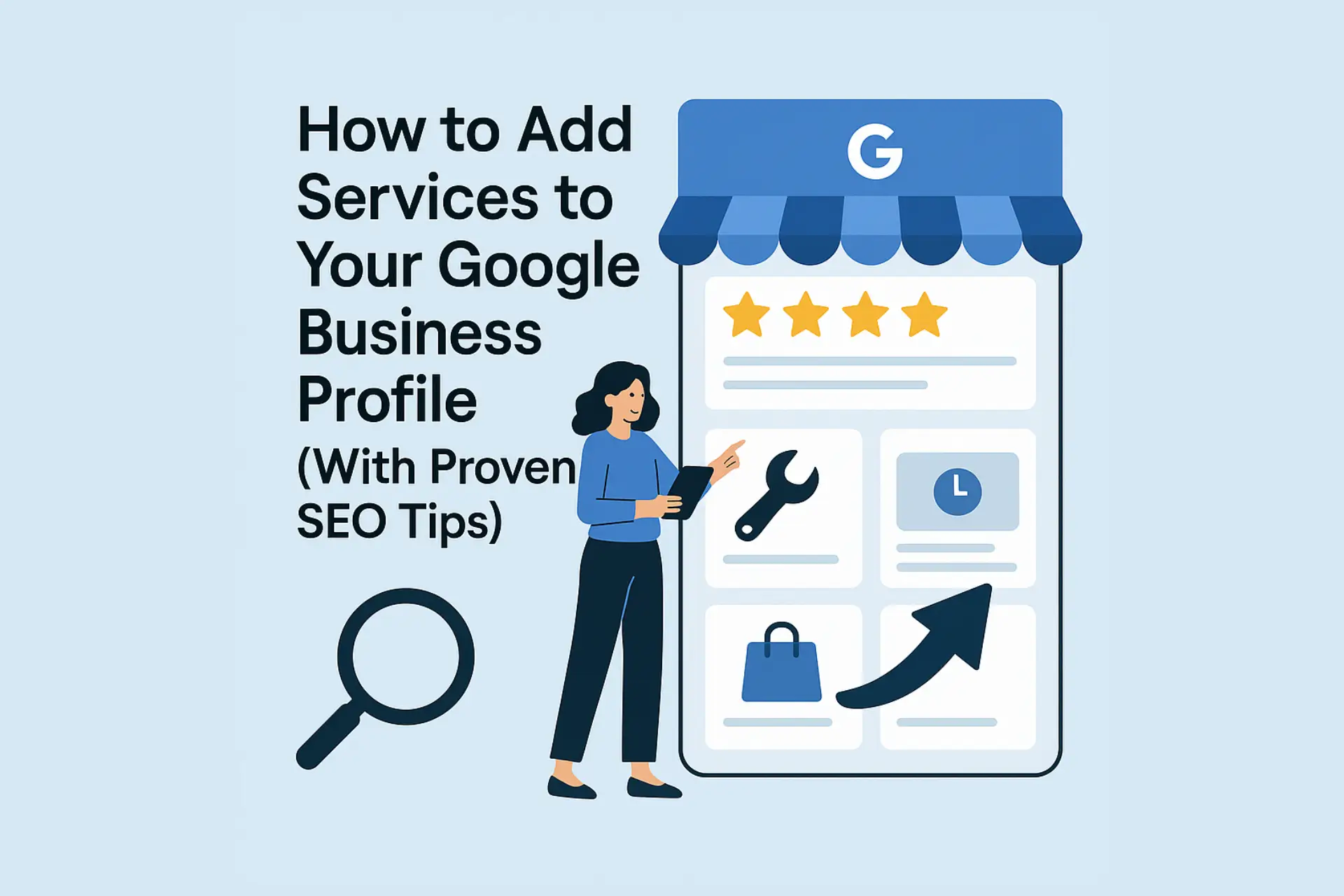
How to Add Services to Your Google Business Profile With Proven SEO Tips
Table of Contents Struggling to Showcase Your Services on Google? Here’s How to Fix That and Boost Your Local SEO If your Google Business Profile (GBP) isn’t fully showcasing your services, you’re missing out on potential customers actively searching for what you offer. Many South African business owners don’t realise that properly adding and optimising services on GBP can significantly improve local visibility and Google Maps rankings. I’ve helped local businesses transform their online presence by mastering GBP’s services section. In this blog, I’ll walk you through exactly how to add your services, avoid common mistakes, and apply SEO best practices to attract more leads and sales. What Is Adding Services to Your Google Business Profile? Adding services means listing the specific products or professional offerings your business provides directly within your Google Business Profile. This feature allows potential customers to see your services right on Google Search and Maps, improving relevance and click-through rates. Why Adding Services to Your Google Business Profile Matters for South African Businesses Increases Visibility: Google uses the services listed in your GBP to match local search queries, helping your business appear for relevant searches. Builds Authority: Detailed, accurate service listings enhance trust with both Google and your customers. Boosts Conversions: Clear service descriptions help users quickly decide if you offer what they need — reducing friction in the buying process. Supports Voice Search: Structured services increase your chances of appearing in voice queries and featured snippets. How to Add and Optimize Services on Your Google Business Profile step by step Step 1: Access Your Google Business Profile Dashboard Log into your GBP account at business.google.com. Step 2: Navigate to the Services Section Click on “Services” from the menu. Step 3: Add Your Services List your core services with clear, simple titles. Add detailed descriptions using keywords naturally, focusing on what your customers search for in South Africa (e.g., “Cape Town hair styling,” “Johannesburg car repairs”). Use consistent terminology aligned with your website and marketing materials. Step 4: Organize Services by Category Group similar services under categories for easier navigation and cognitive fluency. Step 5: Review and Publish Double-check all entries for spelling, clarity, and completeness before saving. Common Mistakes to Avoid When Adding Services Using vague or generic service names Omitting keywords relevant to your location or industry Leaving service descriptions blank or thin on detail Inconsistent service names compared to your website or other listings Neglecting to update services regularly My Proven Strategy to Maximize SEO Impact From Your GBP Services Step What I Do 1 Research keywords relevant to your industry and location 2 Create clear, benefit-focused service titles and descriptions 3 Organize services logically in GBP 4 Consistently update with seasonal or new offerings 5 Monitor performance via Google Insights and adjust as needed This process ensures your GBP works strategically to convert local searchers into paying customers. FAQs About Answer Engine Optimization How do I add services to my Google Business Profile? Log into your GBP dashboard, go to the Services section, add your service titles and descriptions, then save. Why should I optimize services on my Google Business Profile? Optimized services improve your local search relevance, increase trust, and help attract more qualified leads. Can I add SEO keywords in my Google Business Profile services? Yes, incorporating location-based and industry-specific keywords naturally helps Google connect your profile with relevant searches. Can I add multiple services to my Google Business Profile? Yes, you can add as many services as your business offers, grouped under categories. Will adding services to GBP improve my Google Maps ranking? Yes, detailed and optimized services increase your relevance, helping boost your Maps rankings. How often should I update my services on Google Business Profile? Review and update your services at least quarterly or whenever you launch new offerings. Is there a limit to how long service descriptions can be? Google allows up to 1,000 characters per service description; use this space wisely to add detail without keyword stuffing. Start Optimizing Your Google Business Profile Services Today for More Local Leads Adding and optimizing your services on Google Business Profile isn’t just about ticking a box — it’s a strategic move to boost your local SEO and convert more customers. Ready to make your Google Business Profile work harder for you?Contact me today for expert local SEO support and custom strategies that deliver results. Explore more about local SEO in my Local SEO Checklist: 10 Essentials to Get Found in Your Area and How to Rank Higher on Google Maps Without Paying for Ads.

SEO Consultant vs SEO Agency: What’s Better for Your Business Website?
Table of Contents If you’re serious about getting found online, you’ve probably asked yourself this: Should I work with an SEO consultant or hire a full-service SEO agency? The truth is the right choice depends on your goals, your budget, and how much personalized support you need. In this blog, I’ll walk you through the key differences, pros and cons, and help you decide which option is better for your business website. What’s the Difference Between an SEO Consultant and an SEO Agency? SEO Consultant: A solo expert (like me) who works 1-on-1 with you to create and implement a personalized SEO strategy for your website. SEO Agency: A company with a team of SEO professionals who manage multiple clients using standardized systems and processes. Why This Comparison Matters for Small Business Owners Choosing the wrong partner can lead to wasted time, missed leads, and money down the drain. Here’s why understanding the difference is critical: Framing: Your SEO should fit your goals — not force you into a bloated package you don’t need. Loss Aversion: If your website isn’t ranking, every day without the right help = missed revenue. Authority & Trust: The right SEO partner becomes an extension of your business. Whether you run a wellness practice, online store, or local service business — your decision should be guided by what will move the needle for your site. Pros & Cons: SEO Consultant vs SEO Agency ✅ SEO Consultant ✅ SEO Agency Pros Pros ✔ Personalized attention ✔ Full team of specialists (content, tech, PR, etc.) ✔ Direct access to the expert ✔ Access to advanced tools and resources ✔ Agile, strategy-first approach ✔ Scalable systems for large websites ✔ Better alignment with your brand ✔ Ideal for enterprise-level campaigns ✔ Often more cost-effective for small businesses Cons Cons ❌ Limited bandwidth (one person) ❌ Less personalized attention ❌ May not offer every service (e.g., link building at scale) ❌ Higher fees and retainers ❌ Risk of being a “small fish” on their client list ❌ May lock you into long-term contracts How to Decide Which Is Right for Your Website Here’s a quick framework: Choose a Consultant if: You want personalized SEO that fits your exact business goals You need clear communication and fast pivots You’re a service provider, small team, or local business Choose an Agency if: You’re a large company with multiple sites or complex tech You want an entire SEO department on standby You’re scaling fast and need volume Need help figuring this out? Book a Free SEO Discovery Call and I’ll walk you through what works best for your goals. Mistakes to Avoid When Choosing Between a Consultant and Agency Hiring based on price alone Assuming bigger means better Ignoring transparency or communication Not asking who will actually do the work Many of my clients came to me after being burned by agencies who overpromised and underdelivered. Don’t let that be your story. Why Many Small Businesses Prefer Consultants I’ve worked with solo entrepreneurs, therapists, caterers, eCommerce stores, and more — and the biggest feedback I get is this: “I finally feel like someone actually understands my business.” That’s the power of working 1-on-1 with someone who takes the time to listen, analyze, and act. FAQs About SEO Consultant vs Agency What’s the difference between an SEO consultant and agency? An SEO consultant provides hands-on, personalized SEO services. An agency offers SEO at scale through a team and set systems. Is a consultant or agency better for a small business website? A consultant is usually better for small businesses who want personalized help, faster turnarounds, and direct strategy. Do SEO consultants do everything an agency does? Consultants can offer similar services but may specialize in certain areas. They provide strategy with a personal touch. Which is more affordable — a consultant or agency? Consultants are often more affordable and flexible, especially for small or medium-sized businesses. You pay for expertise, not overhead. Can an SEO consultant handle technical SEO? Yes. Most consultants (like me) are well-versed in both technical and content SEO and will guide or implement what’s needed. What should I look for when hiring either one? Look for proven results, transparent reporting, communication style, and whether they understand your business goals. Is it possible to switch from an agency to a consultant? Absolutely. Many clients start with an agency and later switch to consultants for better focus and ROI. Ready for a More Personalized SEO Approach? You don’t need a huge team. You need the right strategy — built around your website, goals, and audience. Book Your Free SEO Call and let’s decide together if working with a consultant is the better move for your business.

What Does a Website SEO Consultant Do? And Do You Need One?
Table of Contents If your website looks great but doesn’t show up on Google, this post is for you. You’re probably wondering: “What exactly does an SEO consultant do—and do I really need one?“ Let’s break it down. As a website SEO consultant, I help B2C, B2B businesses (like yours) get found online, attract better traffic, and turn visitors into paying clients—without running expensive ads. In this blog, you’ll learn what a website SEO consultant actually does, how it benefits your business, and how to know if it’s time to hire one. What Is a Website SEO Consultant? A website SEO consultant is a professional who helps businesses improve their search engine visibility. They optimize your site so that it ranks higher in search results for the keywords your ideal customers are using. In simple terms: I help your website show up, get clicked, and convert. Why Hiring a Website SEO Consultant Matters for Your Business Your dream customers are searching online—right now. If you’re not showing up, you’re invisible. Here’s why working with an SEO consultant is a smart move: Get Found Faster: A properly optimized site means Google knows what you offer. Drive High-Intent Traffic: You attract people who are already looking for your services. Improve Sales Without Ads: Organic traffic compounds over time and costs less. Fix What’s Holding You Back: From slow load times to bad metadata, I catch what others miss. Gain a Competitive Edge: Most of your competitors either guess or give up. You won’t. What Does a Website SEO Consultant Do? Here’s a breakdown of what I (and top SEO consultants) typically do: Audit Your Site: I uncover what’s broken, slow, or confusing to users and Google Keyword Research: Find what your ideal clients are typing into Google On-Page SEO: Optimize titles, content, images, URLs, and internal links Technical Fixes: Improve speed, structure, mobile usability, and crawlability Content Strategy: Help you write or improve blogs, service pages, and FAQs Analytics & Tracking: Set up data to track what’s working and where to grow Want to find out exactly what’s holding your site back? Request a Free SEO Check-In Common Mistakes I See and How a Consultant Fixes Them Too many business owners waste time and money with these mistakes: Launching a website without SEO built in Using the wrong keywords that clients aren’t searching for Stuffing keywords and hurting readability Ignoring slow load times, which kills rankings and conversions No metadata, alt text, or internal links (Google hates this) Tip: Think of SEO like the foundation of your online house. No point decorating the inside if Google can’t find the front door. FAQs About Website sEO consultant What does a website SEO consultant do? An SEO consultant improves your website’s content, speed, and structure so it ranks better in Google and drives more qualified leads. Do small businesses need an SEO consultant? Yes. If your website isn’t showing up or converting, an SEO consultant can uncover hidden issues and turn your site into a sales tool. How long does SEO take to work? Most websites see meaningful SEO results within 3–6 months with consistent effort. What’s the difference between an SEO consultant and an agency? An SEO consultant offers 1-on-1, personalized strategy. Agencies often work at scale with templated approaches. Consultants are ideal for custom solutions and faster pivots. How much does it cost to hire a website SEO consultant? Costs vary, but you should expect value—not just tasks. I offer custom pricing based on goals, starting with a free call. Can I do SEO myself without a consultant? You can learn some basics, but without the right tools and strategy, you may waste time or cause harm. A consultant prevents that and gets faster results. What kind of businesses benefit most from SEO consulting? Local businesses, e-commerce shops, wellness brands, and service providers who want consistent leads without relying on ads. Will I need to redesign my website for SEO? Not always. Often, small tweaks can make a huge difference. I always start with what you already have. Ready to Turn Your Website Into a Sales Machine? Your competitors are ranking—and getting calls—while you’re reading this. Let’s fix that. Book Your Free SEO Call Now and I’ll show you exactly what to change, improve, or fix to grow your traffic and leads. No pressure. Just clarity.
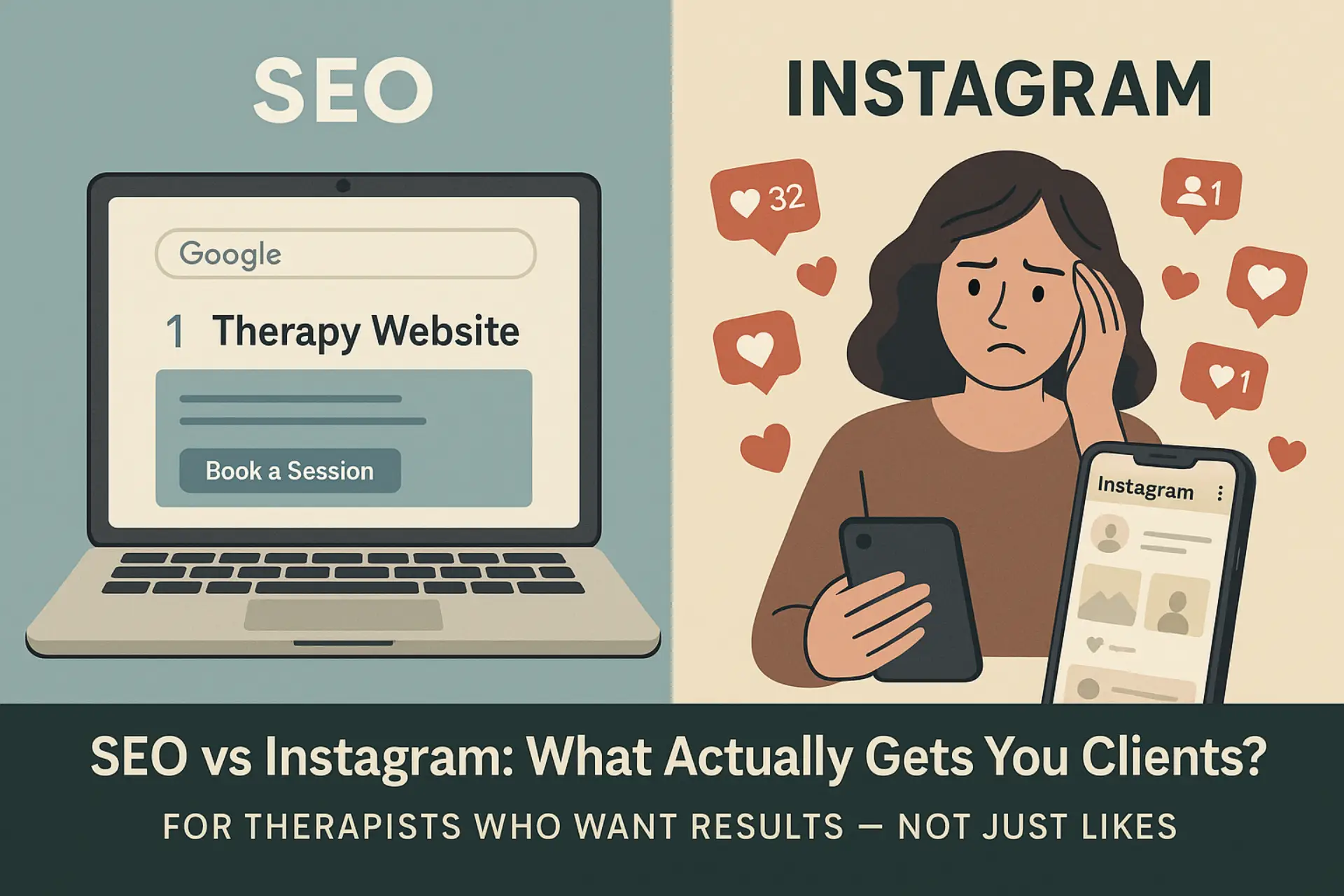
SEO vs Instagram: Where Therapists Should Focus to Get Clients
Table of Contents Are you torn between spending hours creating content on Instagram or investing in SEO to grow your therapy practice? You’re not alone. Many therapists feel pressured to post, go live, and constantly show up online just to stay visible. But does it actually bring in paying clients? In this blog, you’ll discover: The pros and cons of SEO vs Instagram What actually converts visitors into bookings How to choose the right strategy for your therapy practice Let’s settle the debate. If your goal is to get more therapy clients consistently, SEO is a better long-term strategy than Instagram. Instagram builds visibility, but SEO builds discoverability and trust when people are ready to book. SEO vs Instagram: What’s the Difference? Aspect SEO (Search Engine Optimization) Instagram Purpose Helps your website rank on Google for keywords like “therapist near me” Share content, build a following, and connect with your audience Availability Works 24/7 Requires frequent posting Traffic Type Brings high-intent traffic Great for brand awareness Growth Grows over time Short content lifespan (24–72 hours) Strategy Base Based on keywords and user needs Based on engagement and visuals Measurability Easier to track ROI Harder to track ROI When Instagram Works (And When It Doesn’t) Instagram can be effective for: Connecting with an audience that already knows you Sharing personal insights and stories Building your personal brand But it often fails to convert because: People scroll for entertainment, not services There’s no search intent Algorithms limit visibility unless you post often “Likes don’t pay the bills. Bookings do.” Why SEO Wins for Client Conversion People search when they’re ready to act → Unlike social media, searchers are problem-aware and looking for help You show up for local, high-intent queries → E.g., “grief counsellor in Cape Town” It builds trust before they even call → Ranking on Google gives authority It reduces time spent on content → One optimized page can bring traffic for years SEO brings clients to you, even while you sleep. A Balanced Strategy: Instagram + SEO You don’t have to choose one. You can: Use SEO to bring in discovery traffic Use Instagram to nurture and convert warm leads The key is knowing where to put your priority. If you’re spending 80% of your time on Instagram and still not fully booked, it’s time to shift. See how SEO helped this therapist clinic grow — View full case study FAQs About SEO vs Instagram Is Instagram or SEO better for getting therapy clients? SEO is more reliable for attracting high-intent, ready-to-book clients. Instagram is better for brand awareness. Can I use both Instagram and SEO? Yes. Use SEO for discoverability and Instagram for building personal connection. How long does SEO take to work for therapists? You can expect results in 3–6 months with a solid strategy. Is Instagram still useful for therapists? Yes, but it works best as a support channel. It’s great for visibility, not always for conversions. Do I need a big following to succeed with Instagram? Not necessarily. Engagement matters more than follower count — but it’s still not as targeted as SEO. Should I quit Instagram completely? Not if you enjoy it and it brings in leads. But if it’s draining your energy without results, SEO is more sustainable. Final Thoughts: Focus on What Works You became a therapist to help people — not become a content creator. If social media is draining you, it’s okay to choose a smarter strategy. Let your website and Google do the heavy lifting. Book a free strategy call to learn how SEO can get your ideal clients to find — and book — you.
Why Your Therapy Website Isn’t Getting Clients And How to Fix It
Table of Contents You have a website. You’re qualified. You’re ready to help. But no one’s booking. This is one of the most frustrating things I hear from therapists: “I have a website, but it’s not bringing in any clients.” And it’s not your fault. Most therapist websites are built to look professional, not to attract and convert. Most therapy websites don’t get clients because they lack SEO, clear messaging, trust signals, and strong calls to action. With the right strategy, your site can attract and convert ideal clients consistently. Why Your Therapy Website Isn’t Getting Clients Here are the top reasons I see over and over again: 1. Your Website Isn’t Optimized for SEO If your website doesn’t show up when people search for “therapist near me” or “anxiety counselling in [your city],” they won’t even know you exist. No keyword targeting Weak meta titles and descriptions Missing location signals 2. Your Messaging Is Too General Trying to help everyone = helping no one. When your website says “I work with individuals, couples, families, teens, trauma, addiction, stress, grief…” People don’t feel seen. 3. You Don’t Have Trust Signals Visitors won’t book if they don’t trust you. No professional photo or bio No testimonials or reviews No affiliations (HPCSA, BHF, etc.) 4. Your Site Isn’t Designed to Convert Even if someone finds you, they might leave if: There’s no clear CTA (call, email, book a session) The design looks outdated or cluttered It’s not mobile-friendly _”Most clients decide in the first 5 seconds if they feel safe and confident in your care.” How to Fix Your Therapy Website 1. Get Clear on Who You Help Create content that speaks to one person, not everyone. Use language that mirrors their fears and hopes. 2. Add Location-Based SEO Update your metadata with keywords like “Therapist in [City]” Use headings and content that reference your location Create service pages for specific types of therapy 3. Show Real Trust Signals Add testimonials (with consent) Include affiliations and licenses Show a clear, friendly photo of yourself 4. Simplify and Guide Your Visitors Add a clear CTA on every page Use simple navigation and calming design Highlight results or benefits (“Feel more in control,” “Heal from trauma,” etc.) Real Example: A Therapist Website Makeover See how SEO helped a pediatric therapy clinic grow fast — View full case study FAQs About why your website is not getting you clients Why isn’t my therapy website getting clients? Because it likely lacks SEO, trust signals, strong messaging, and clear CTAs. What should my therapy website include? A strong homepage message, location keywords, trust signals, clear CTAs, and service-specific pages. Can I fix my therapy website without rebuilding it? Yes. Small updates to content, SEO, layout, and CTAs can make a big difference without a full redesign. How do I know if my therapy website is SEO-friendly? Use tools like Google Search Console, or book a site audit with an SEO expert to check your rankings, metadata, and keywords. Is blogging necessary for therapy websites? Not mandatory, but it helps with SEO and shows your expertise. Should I include prices on my therapy website? It depends on your approach. Listing pricing can filter out unqualified leads and increase transparency. Can I get more clients without social media? Yes. SEO and a high-converting website are more sustainable and less time-consuming than relying on social platforms. Ready to Turn Your Website Into a Client Magnet? You deserve a website that works as hard as you do. If your therapy site isn’t getting clients, I can help you fix it fast. Book a free strategy call and let’s build a website that books real clients — not just looks nice.
SEO for Therapists: How to Attract More Clients Without Relying on Social Media
Table of Contents Tired of chasing Instagram trends, spending hours on posts, or waiting for referrals that never come? You’re not alone. Many therapists feel invisible online, even when they’re doing meaningful work every day. But here’s the truth: clients are searching for therapists online every single day — and most of them never make it past the first page of Google. That’s where therapist SEO comes in. With a clear SEO strategy, your private practice can show up where it matters most: in front of clients actively looking for help — without the stress of social media. What Is SEO for Therapists? SEO for therapists means improving your website and online presence so you appear in search results when someone Googles phrases like “therapist near me” or “online counselling for anxiety.” It’s about being found by the right people at the right time, without having to run ads or post daily on social media. Why SEO Matters for Therapists Think about the last time you searched for a service — maybe a dentist or a restaurant. You probably didn’t scroll past the first few results. That’s exactly what your potential clients are doing. Here’s why SEO should be a priority for your therapy practice: Builds long-term visibility → Unlike ads or posts that disappear, good SEO keeps working for you 24/7 Connects with high-intent clients → These are people actively looking for help, not just scrolling Establishes your authority → Ranking well builds trust before someone even clicks Saves time and effort → No more burnout from social media “If they can’t find you, they can’t work with you.” How to Use SEO to Grow Your Therapy Practice You don’t need to be a tech expert. Here’s what actually moves the needle: 1. Set Up and Optimize Google Business Profile Claim your Google Business Profile (if you haven’t already) Add your location, service areas, categories, hours, and contact info Upload photos of your space (if applicable) Encourage happy clients to leave Google reviews 2. Use Local Keywords on Your Website Include phrases like “therapist in [Your City]” or “online counselling in South Africa” Add them to your page titles, meta descriptions, H1 headings, and content 3. Create Pages for Each Service Anxiety therapy, couples counselling, trauma recovery, etc. One service per page helps Google understand and rank your content 4. Add Trust Signals Testimonials (with consent) Associations (HPCSA, BHF, etc.) Professional photos, bios, contact info 5. Start Blogging Strategically Answer common questions: “How does therapy work?”, “How to choose a therapist?”, etc. Use each blog to target long-tail keywords and build trust Want help? Book an SEO Audit for Your Therapy Practice — I’ll show you where to improve and what to focus on. Common SEO Mistakes Therapists Make Avoiding these can instantly boost your visibility: No location keywords → People search for help near them. If you’re not specific, Google won’t show you. Only one page for everything → Combining services on one page confuses search engines No clear calls to action → Visitors don’t know what to do next (book? call? email?) Slow, outdated website → High bounce rate = lower rankings Ignoring Google reviews → Social proof influences both rankings and bookings “Good SEO isn’t just about traffic — it’s about the right traffic turning into real bookings.” My Proven 5-Step SEO Strategy for Therapists Here’s what I implement for every therapist I work with: Step 1: Discovery + Audit I analyze your current site, content, keywords, and Google presence Step 2: Local SEO Setup Google Business optimization NAP (name-address-phone) consistency Local citations Step 3: On-Page Optimization Fix your metadata, site speed, and structure Add keywords and trust signals Step 4: Content Strategy Create SEO-friendly blogs and service pages that speak to your clients’ pain points Step 5: Authority Building Encourage reviews, build quality backlinks, and track results monthly 🎯 This process doesn’t just boost rankings — it gets more of the right clients through your door. FAQs About SEO for therapists What’s the difference between therapist SEO and general SEO? Therapist SEO focuses on mental health services, local search, trust-building, and ethical marketing. It’s more personal and regulated than typical SEO for e-commerce or blogs. Do I need to blog as a therapist to rank on Google? Blogging isn’t mandatory, but it helps. Quality blog posts answer questions clients are searching for and boost your authority. How do I get more Google reviews ethically? Ask satisfied clients after a session (if appropriate), or send a follow-up email with a direct link. Always respect privacy and consent. Should I hire someone to do my SEO? If you’re not seeing results or don’t have the time to learn SEO, hiring a specialist can save you time and grow your practice faster. Does SEO really work for therapists? Yes. SEO helps you appear in search results when people look for therapy — bringing consistent leads without ads. How long does SEO take for a therapy practice? You can expect to see meaningful results in 3–6 months with consistent effort and the right strategy. Can I do SEO without social media? Absolutely. SEO works independently of social media — focusing on search engine visibility, not engagement metrics. Ready to Be Found By the Right Clients? If you’re serious about growing your therapy practice, it’s time to stop depending on social media and start showing up where people are already searching: Google. I help therapists like you attract more clients with a proven SEO strategy built around your location, services, and goals. Book a free strategy call to see how SEO can transform your practice. Let’s make it easier for the right people to find you — and book.

Therapy Website Conversion Tips: How to Know If You’re Turning Parents Away
If you’re a therapist or wellness professional, these therapy website conversion tips will help you turn more website visitors into booked clients — without changing your entire brand. The Real Problem Most Therapy Websites Have I’ve been working with therapy practices for years, and I see the same frustrating pattern over and over again: they’re getting website traffic but hardly anyone books an appointment. Sound familiar? Here’s what’s really happening: parents are visiting your site looking for help, but something — layout, messaging, trust signals — is making them click away instead of reaching out. The good news? You can fix most of these issues quickly with the right strategy. Why Parents Leave Your Therapy Website Let me paint a picture. A parent is up at 11 PM googling “child therapy near me” because they’re worried about their kid. They land on your website — and within 30 seconds, they’re gone. Why? Your site feels cold or clinical It’s confusing or hard to navigate It doesn’t speak to their emotional state It lacks a clear next step When someone is emotionally vulnerable, they need to feel safe, understood, and guided. A cluttered or generic website pushes them away. What Makes Parents Stay (And Eventually Book) After auditing dozens of therapy websites, here’s what actually makes parents stay and book: Emotional resonance: Use language that reflects their fears, hopes, and needs. Instead of: “We offer comprehensive therapy services.”Try: “Worried about your child’s behavior? We’re here to help — and you’re not alone.” Trust and authority: Show credentials and personality. Add a friendly photo and a short “Why I do this” story. A clear call-to-action (CTA): One obvious next step — like “Book a Free 15-Minute Call” — performs better than five competing buttons. Mobile-friendly design: Over half your visitors are browsing on phones. Make sure your forms and navigation work flawlessly on mobile. If you want to go deeper and optimize your online visibility, check out our practical checklist. Small Changes That Make a Big Difference You don’t need a full redesign. Try these small but powerful therapy website conversion tips: Fix your homepage headlineLead with a benefit or pain-point you solve. Use real testimonialsWith parent permission, share specific, emotional results. Simplify your contact formFewer fields = less friction. Show your faceSmiling, warm, professional photos build connection. Make your phone number clickableEspecially for mobile users. Want to stop losing parents at the first click? Get a free therapy website audit focused on conversion rate optimisation + local SEO. Book your free 15-min strategy consult now The Booking Process Matters More Than You Think Many therapy sites lose potential clients right at the point of action. Here’s what kills conversions: Confusing online scheduler Requiring account sign-up before booking Long, complex intake forms Make it easy. A simple form, or a direct “Book a free call” button, removes friction and boosts bookings fast. Common Mistakes That Hurt Your Website Conversions Trying to treat everythingIf your site lists 12 specialties, parents may not feel you’re focused on their child. Hiding pricesLack of clarity on pricing creates hesitation — even a “starting at” range builds trust. Too much therapist jargonParents want relatable language, not academic terms. No clear next stepIf they’re unsure what to do next, they’ll leave. Make the action obvious. What This Actually Looks Like in Practice I worked with a child therapist who had decent traffic but few inquiries. Her site looked “professional,” but it lacked warmth and clarity. We made these simple changes: Changed her headline to:“Is your child struggling? You’re not alone, and there is help.” Added a personal story about why she became a therapist Made her phone number clickable and placed it in the header Added 3 testimonials from real clients Created one clear CTA: “Book a Free 15-Minute Chat” Same traffic, same services — but now, the website finally connected with parents emotionally. Result? A 60% increase in booking calls — with the same traffic. Read Case study. The Bottom Line our therapy website should feel like a warm invitation — not a clinical brochure. Parents are looking for clarity, empathy, and confidence. When your website removes the friction and speaks their language, they’ll trust you enough to take that first step. If you’re still not getting the bookings you need, it might be worth having someone take a fresh look at your site. Sometimes we’re too close to our own work to see what’s not working. FAQs About Therapy Website Conversion How do I know if my website is the problem?– Check your site’s bounce rate and average time on page. If people leave quickly or drop off at the booking stage, your site may be causing friction. Should I offer online booking?– Yes — if it’s easy to use. A confusing scheduler is worse than none at all. How important are testimonials?– Extremely. Parents want to see that others have had positive outcomes. Use emotional, specific stories (with permission). What if I don’t want to overshare online?– You don’t need to share personal stories — just enough warmth and personality to make people feel safe. How long before I see results from website changes?– If implemented correctly, most therapy practices see improved conversions within 30–60 days. Ready to See Why Your Website Isn’t Booking Clients? Book a free 15-minute therapy website audit — I’ll help you identify the key fixes you need to turn visitors into booked clients.

The Best SEO Practices for Pediatric Clinics in South Africa
Table of Contents If you’re running a pediatric therapy clinic and struggling to get found online, this blog is for you. You may have the best therapists and warmest clinic environment — but if your site isn’t ranking, you’re invisible to the very families looking for your help. That’s where implementing SEO best practices comes in. In this guide, I’ll share the search engine optimization best practices we use at SEO With Ntsakisi to help South African clinics improve visibility, attract local parents, and fill their calendars — sustainably. What Are SEO Best Practices for Pediatric Clinics? SEO best practices (or “SEO best practises” in UK English) are guidelines that help your website rank higher on search engines like Google. For pediatric clinics, these include: Structuring your site correctly Targeting local keywords Creating parent-focused content Optimizing your Google Business Profile Building trust signals like reviews Whether you’re after good SEO practices or the most current SEO optimization best practices, the goal is always the same: more visibility, more trust, more bookings. Why SEO Best Practices Matter for Pediatric Clinics Search engines are now the first place parents turn to when looking for therapy support. If your clinic doesn’t appear in those top results, you’re losing clients to competitors — even if you offer better care. Applying search engine optimization best practices helps you: Appear for “near me” searches Build trust with prospective clients Turn online visitors into real bookings Stay ahead of competitors in your area Pediatric Clinic SEO Checklist: What to Do Step-by-Step This checklist combines good SEO practices, expert insights, and psychology-based strategy to help your clinic grow. 1. On-Page SEO: Get Your Site Search-Ready These SEO best practices ensure Google understands your site: Use your target keyword in the H1, meta title, and first paragraph Add descriptive meta tags to every page Compress and name images properly (e.g. child-speech-therapy.jpg) Use clean, short URLs (e.g. /occupational-therapy-pretoria/) Internal link your blog posts to service pages Structure content using headers (H2s, H3s) Add testimonials and trust markers for credibility Tip: Sites that follow on-page SEO best practices convert better and rank higher on google — it’s a win-win. 2. Local SEO: Own Your Location Local visibility is critical. Here’s how to apply SEO best practises for your area: Set up or optimize your Google Business Profile Use local keywords (e.g. “pediatric OT Cape Town”) Add geo-tagged images and posts to your GBP Get listed in online directories like Medpages, Brabys, and Health4You Encourage satisfied parents to leave Google reviews Keep your name, address, and phone number consistent across platforms Why it works: These local SEO optimization best practices make your clinic visible exactly when parents are searching. 3. Content SEO: Educate, Rank, Convert Great content positions you as a trusted expert. Here’s what works: Answer common parent questions in blog format Include long-tail keywords like “how to know if my child needs speech therapy” Add visuals and bullet points to increase readability Use internal links to services and location pages Add FAQ schema markup to rank in featured snippets Update blog posts every few months Strategy tip: Following content SEO best practices builds long-term traffic and positions you as a local leader. Don’t Leave Visibility to Chance Your clinic deserves to be seen by the families who need you most. Following SEO best practices will make that happen — but we can help you do it faster. Book a Free Strategy Session SEO Mistakes Pediatric Clinics Should Avoid Even the best clinics make these costly SEO mistakes: Ignoring long-tail keywords that parents search Reusing the same meta description site-wide Missing or outdated Google Business Profile info Overcomplicating site structure (confuses Google and parents) No content or outdated blog posts Forgetting reviews — social proof is powerful Avoiding these missteps is just as important as doing the right things. FAQs About SEO best practices for pediatric clinics What are good SEO practices for pediatric clinics?Good SEO practices include optimized titles, fast-loading pages, local keywords, quality content, and consistent business listings. What are the top search engine optimization best practices?Top practices include keyword research, on-page optimization, mobile-first design, local SEO, and content creation that answers search intent. Why is content important for SEO?Content builds authority, helps you rank for long-tail keywords, and educates parents — driving both visibility and trust. What’s the difference between SEO best practices and SEO optimization best practices?They’re often used interchangeably — both refer to steps that improve your search engine visibility and help attract the right audience. How long before I see results from SEO?You may see small improvements in 2–3 months, with stronger results by month 4–6. SEO is a long-term growth strategy. Can I follow SEO best practices myself or should I hire someone?You can start on your own, but working with a strategist ensures your SEO is set up correctly, consistently, and with ROI in mind. Final Takeaway After reading this guide, you now understand how to apply the best SEO practices for pediatric clinics — from on-page to local and content SEO. But knowing is only half the battle. Action is where the growth happens. Whether you DIY or want expert support, these good SEO practices will move your clinic forward. 📞 Book Your Free Consult Now

Pediatric Therapy Marketing Strategies That Actually Attract Clients
If you’re a pediatric therapy clinic owner or marketer, you’ve likely felt the frustration of empty appointment books or slow client growth. I get it — attracting the right clients can feel like chasing shadows. But here’s the truth: with smart marketing strategies tailored for your unique audience, you can stop guessing and start growing confidently. In this post, I’ll show you the exact pediatric therapy marketing strategies that help clinics in South Africa like yours get noticed, build trust, and convert parents into loyal clients — without overwhelming your team or budget. By the end, you’ll understand which marketing moves to make today to grow your practice tomorrow — and beyond. What Are Pediatric Therapy Marketing Strategies? Pediatric therapy marketing strategies are targeted approaches designed to connect your clinic’s services with parents actively seeking therapy solutions for their children. These include organic tactics like local SEO and content creation, social proof, and digital ads — all optimized to boost your clinic’s visibility and credibility online. Why Pediatric Therapy Marketing Strategies Matter for Your Clinic Parents want expert care, reassurance, and convenience. If they don’t find you easily or doubt your expertise, they’ll look elsewhere. Effective marketing: Builds your authority in pediatric therapy Attracts local clients ready to book Reduces stress by making lead generation predictable Creates emotional connections through trust signals and social proof Ignoring marketing means missing out on steady leads and allowing competitors to fill your spot. How to Implement Winning Pediatric Therapy Marketing Strategies Here’s a simple, step-by-step framework you can follow: 1. Perfect Your Website Essentials (Your Digital Front Door) Use clear, jargon-free language that speaks to parents’ concerns and hopes. Add strong trust signals like testimonials, certifications, and success stories. Ensure your site is mobile-friendly and fast-loading to reduce friction. Make CTAs (calls to action) visually clear using eye-tracking principles — bright buttons, easy navigation. Check out our website development services. 2. Master Local SEO (Be Found When It Matters Most) Claim and optimize your Google Business Profile with accurate info and photos. Use local keywords naturally, such as “pediatric therapy Johannesburg” or “speech therapy Pretoria.” Get listed on trusted local directories and encourage reviews — social proof boosts rankings and conversions. Keep your NAP (Name, Address, Phone) consistent everywhere. 3. Create Helpful Content That Educates and Converts Write blog posts answering common parent questions like “How to know if my child needs occupational therapy.” Use emotionally engaging headlines and easy-to-read layouts. Offer free downloadable resources (checklists, guides) in exchange for contact details — a reciprocity trigger. Include videos and visuals that build dopamine-driven engagement. 4. Leverage Social Proof and Authority to Build Trust Display authentic testimonials prominently on your website and social channels. Share case studies or success stories. Show certifications or awards to anchor authority. Highlight positive reviews consistently. 5. Combine Organic Growth With Smart Paid Ads Run Google Ads targeting local keywords with clear benefits. Use Facebook and Instagram ads to reach local parents with tailored messages. Employ remarketing ads for visitors who didn’t book initially to reduce loss aversion. Common Mistakes to Avoid Ignoring local SEO: You risk being invisible to nearby families searching right now. Overloading visitors with options: Too many choices create decision paralysis — keep CTAs simple and clear. Neglecting mobile optimization: Most parents search on phones, so slow or broken sites lose leads. Not asking for reviews: Missing social proof opportunities means missed trust and rankings. Overlooking emotional messaging: Therapy decisions are emotional; speak to that to connect deeply. Ready to Get More Clients for Your Pediatric Therapy Clinic? Don’t let your clinic stay invisible while competitors win the clients meant for you. With the right strategy, you can attract more parents, build trust, and grow your clinic without wasting money on the wrong tactics. Book A Free Consultation My Proven Pediatric Therapy Marketing Process I use a strategic, step-by-step approach combining SEO, psychology, and neuromarketing: Discovery: Understand your clinic’s unique strengths and your ideal clients’ needs. Website & SEO Setup: Optimize your site for conversions and local search. Content & Social Proof: Build authority through valuable content and trusted testimonials. Paid Campaigns: Deploy targeted ads that complement organic efforts. Measure & Optimize: Continuously improve based on data and client feedback. This anchored process builds consistency and trust, delivering sustainable growth over time. FAQs About pediatric therapy marketing strategies How do I attract more clients for my pediatric therapy clinic?Focus on optimizing your website, mastering local SEO, creating helpful content, leveraging social proof, and running targeted paid ads to reach local parents. What are the best pediatric therapy marketing strategies in South Africa?Strategies that combine local SEO, Google Business Profile optimization, content marketing, social proof, and paid digital ads tailored to your clinic’s unique audience. How long does it take to see results from pediatric therapy marketing?Organic strategies like SEO can take 3-6 months to show steady results, while paid ads can deliver leads almost immediately. Combining both is most effective. Can I do pediatric therapy marketing myself?Yes, but it requires consistent effort and understanding of SEO, psychology, and digital ads. Partnering with experts can speed growth and improve ROI. What are pediatric therapy marketing strategies?They’re targeted tactics to attract and convert local parents seeking therapy services for their children, including SEO, social proof, and content marketing. Why is local SEO important for pediatric therapy clinics?Because parents usually search for nearby therapists, local SEO ensures your clinic appears at the right time and place. How can I build trust with prospective clients online?Use authentic testimonials, certifications, success stories, and consistent positive reviews to create social proof and authority. Conclusion You don’t have to keep struggling to fill your pediatric therapy clinic. By applying strategic marketing rooted in psychology and data, you can attract the right clients, build lasting trust, and grow your business with confidence. Don’t wait — start implementing these proven pediatric therapy marketing strategies today. For a smooth start, book a free consultation to get personalized help.